Personally, I think the twenty years since I walked the entire Greensand Way footpath across Kent and Surrey have passed in a flash. The 110-mile trail begins in the village of Hamstreet, about nine miles from the English Channel and ends in the town of Haslemere in a far flung corner of Surrey. For my friend Tom and I, the Greensand Way formed the first half of a challenge to walk to the other 'Ham Street' in Somerset, which I documented in my travel book 'Mud, Sweat and Beers.'
For the 'china anniversary' re-walk I began with the local section, which falls under the borough of Ashford, back in the winter. The very beginning of the path is currently not signed at Hamstreet Crossroads, although I believe there are plans for a local info board to mark the start very soon. The gravel trail up through Hamstreet Woods (one of the UK's oldest national nature reserves) is a gentle and pleasant incline for cyclists, but upon reaching the brow of the hill, it's footpaths all the way to the settlements of Kingsnorth, Chilmington and Great Chart. I was pleased to see that the route of the trail around Chimington hasn’t been severely marred by the recent housing development, retaining a mostly rural feel throughout. Chilmington is essentially becoming a 'new town' bolted onto the southwestern fringe of Ashford. Beyond Great Chart, the route bridges the Ashford to Tonbridge railway line, and I had to abandon my walk due to the path being flooded all the way down to the Great Stour River near Godinton Park. I’ve never been a fan of swimming!
My second recent dabble at the Greensand Way covered the section which runs along the edge of Godinton Park, again not hugely troubled by the suburban developments, before heading west to pass to the south of Hothfield, descending towards the edge of Hothfield Common (a natural peat bog) and then up and over to Little Chart. From here on, I followed the Stour Valley Path to the village of Lenham, where ponds provide the source of one of Kent's longest rivers, which flows via Ashford and Canterbury, out into the English Channel at the little town of Sandwich, which gave its name to, er... sandwiches!
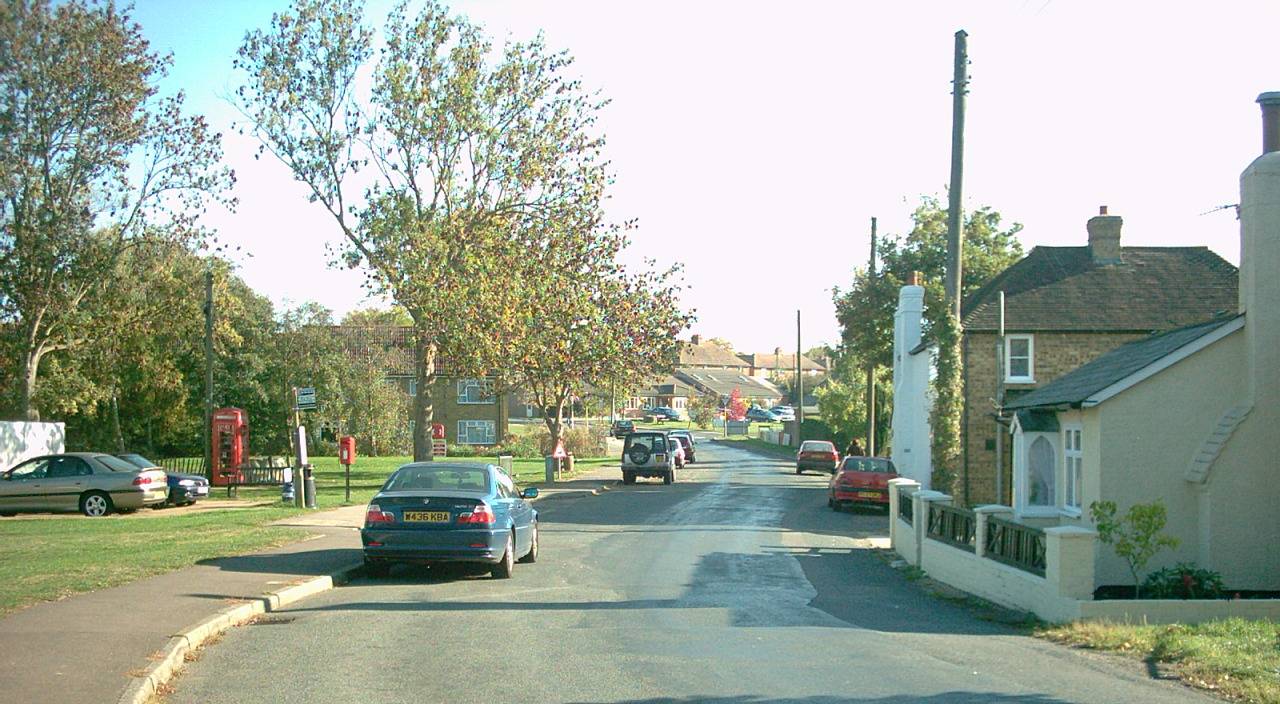
I walked my third section of the Greensand Way backwards (i.e. west to east), catching a bus from the village of Headcorn to pick up the trail at Sutton Valence, heading eastward. This was, and probably still is, my favourite section of the walk. Kent lives up to its epithet of being the ‘Garden of England’ here, with numerous orchards along the route. Whilst the section around Great Chart and Chilmington on my previous amble has the feel of a ridge, this is where the Greensand Hills, which give the path its name, really find their feet. The views southward from the top of the ridge are panoramic, and the path remains fairly high up the slope until dropping off beyond Boughton Malherbe. After Egerton (pictured), the route dips and then climbs again to Pluckley (reputedly England's most haunted village), where the orchards take over again for the descent to Little Chart. After a pint in the Swan’s beer garden, I negotiated a route to Pluckley Station, being somewhat gutted to find that Dering Arms was closed and the next train was in 55 minutes time. Time for some stoicism.
Then on the first May bank holiday, I booked myself a Travelodge in Dorking, with the aim of completing the sections of the Greensand Way west from Reigate to Dorking and east from Reigate to Oxted.
Alighting the train at Reigate Station, the town is reached via a foot tunnel, which was the first road tunnel to be built in the UK, opening in 1823. This was constructed for the ease of stagecoaches, travelling from London to Brighton, so-called because these long journeys were completed in stages, with a change of horses being needed at regular intervals.
The route of the Greensand Way to Dorking was far more scenic than I remembered it from 2006. The path drops dramatically into the valley of the River Mole, which runs from Gatwick to the Thames. The Greensand Ridge doesn’t reassert itself until Dorking area, leaving the North Downs on the right hand side to dominate the skyline.
I passed through the pretty villages of Betchworth and Brockham and passed a small woodland that I camped in during that original thirteen-day hike. I described this as ‘cake shaped’ in my book and I can confirm that it still gives that impression! The 'cherry on top' was passing a blue plaque in Dorking marking Strawberry Studios where 10cc, Paul McCartney, Steveie Wonder and others had all recorded music.
On the following day I would catch the train to Reigate and walk the ‘GW’ eastward. It was nice to walk a section of the trail that my friend Tom and I had completely missed twenty years ago, having made a hash of the map-reading, ending up in Redhill town centre. Thankfully, modern smartphone apps make following a trail of this kind much easier today. However, signage for the trail was still non-existent on the lanes to the west of South Nutfield so I reported this to Surrey County Council. Modern smartphones make this easier too!
My lunchtime refreshment break was at a pub in Bletchingley, a village straddling the A25 at the top of the ridge. It was doing brisk business and the barmaid was clearly feeling the pressure.
The next section feels similar to the Pilgrims’ Way, a more famous trail which runs along the (also more famous) North Downs. Here, the 'GW' runs along the lower part of the ridge’s scarp slope in an easy-to-follow straight line. Crossing the busy A22 near Godstone was more of a challenge, but the section via Tandridge to Oxted passed very quickly. Oxted is perhaps most famous for the being the childhood home of a certain Keir Starmer. Not far from here is the furthest known mention of Hamstreet, where the ‘GW’ crosses the Kent border, with the village signed as being 55 miles away but we'll be visiting that in 'Part II' of this report. For now, we'll trundle down to Hurst Green Station and catch the first of four trains home.

.jpg)